MARINA by Umberto Giordano
THE YALE AUTOGRAPH SCORE OF GIORDANO’S “MARINA” (1888) AND ITS WORLD STAGE PREMIÈRE IN FOGGIA (GIO FESTIVAL)
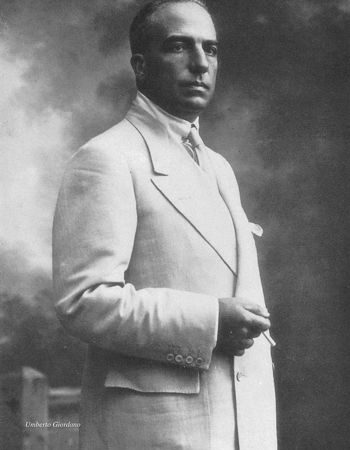
From those first corrections and paste-overs visible in a manuscript composed in 1888 to its World Staging Première on 5 June 2026 at the Teatro Umberto Giordano in Foggia -one hundred and thirty-eight years of silence separating an act of youthful compositional urgency from its rightful theatrical realisation- one may well pause before the accumulated weight of what this silence has cost us. Umberto Giordano, the Foggia-born composer whose eventual triumph with Andrea Chénier in 1896 would secure him a permanent place within the operatic canon, submitted his one-act melodramma Marina to the second Sonzogno Competition in 1888, aged barely twenty, while still enrolled at the Music Conservatory San Pietro a Majella of Naples under the formidable tutelage of Paolo Serrao. He was placed sixth from seventy-three. The jurist Amintore Galli, Sonzogno’s principal arbiter, described the work as the affirmation -strong, distinctive, and original- of a brilliant mind. For one hundred and thirty-eight years, that affirmation remained sealed within the pages of a manuscript that nobody staged, nobody printed, and very nearly nobody read.
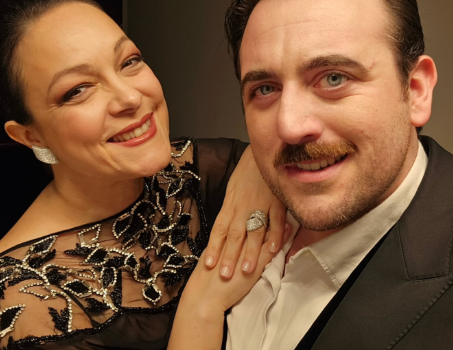
The holograph vocal score -now catalogued under the shelf mark GEN MSS VOL 979 at the Beinecke Rare Books and Manuscripts Library of Yale University- is the sole surviving source for this opera: no printed score, no published libretto, no secondary manuscript copy having emerged from the century and more of its dormancy. The musicologist Andreas Gies identified the manuscript within the Beinecke holdings and prepared a critical edition; the librettist Enrico Golisciani’s text, of which no printed copy survived, was reconstructed by Emanuele d’Angelo from the score’s own annotations and stage directions. A concert première followed on 12 February 2026 at the Teatro Dal Verme in Milan — the historic house of Le Villi (1884) and Pagliacci (1892) — recorded live for Decca Classics with Eleonora Buratto and Freddie De Tommaso under Vincenzo Milletarì.
Then, on 5 June 2026, Marina at last received its World Staging Première at the Teatro Umberto Giordano in Foggia, in a production directed by Giandomenico Vaccari and performed by the Symphonic Orchestra of the Music Conservatory Umberto Giordano of Foggia, inaugurating the first edition of the GIO Festival–Giordano International Opera Festival. The circle, one feels, has closed in the most appropriate of fashions.
THE ARCHAEOLOGY OF A SILENT VOICE
The manuscript itself, one hundred and twenty-six leaves of staff-ruled paper in Giordano’s autograph, demands attention as an object before it does as a musical document. Its title page –Marina: melodramma in un atto / di Umberto Giordano– is written in a calligraphic hand that conveys something more than student neatness: there is a confidence in the inscription, a slight forward inclination, that rather suggests a young composer who knows precisely what he has made and is perfectly willing to say so. We who have grown accustomed, through the historiography of Italian opera, to treating Marina as a footnote -the near-miss that preceded Mascagni’s triumphant Cavalleria Rusticana in the Sonzogno Competition- must recalibrate our expectations upon encountering this score. It is not the work of a diffident apprentice.
The manuscript’s history is itself a small drama of the sort that attaches itself to objects of importance. Acquired from the dealer Lisa Cox for the Beinecke collections in 2001 on the Edwin J. Beinecke Book Fund and catalogued in June 2002 under a former designation -GEN MSS MUSIC MISC VOLUME 13, a label suggesting miscellany, which is perhaps the unkindest archival judgement of all- the score had previously resided within Yale’s Frederick R. Koch Collection since 1986, and before that had passed through Sonzogno’s archive into private custody, drifting without purpose or production for well over a century. The opera had been considered lost. Its survival is, one suspects, a testament to Giordano’s own meticulous habits: the Beinecke catalogue describes it as a reliable source, its notation clear and its structural intentions legible despite substantial layers of self-revision. For nearly one hundred and forty years, the autograph waited in silence for the moment of its awakening.
AN AUTOGRAPH’S INNER LIFE
What distinguishes this manuscript from mere archival curiosity -and what makes GEN MSS VOL 979 a document of genuine musicological significance- is the presence of four pages containing earlier compositional drafts, formerly pasted over the finished score and now, following careful conservation, visible as a distinct documentary stratum preceding pages sixteen and twenty and following pages seventeen and nineteen. These are not trivial alterations: not the correction of a misplaced accidental nor the tidying of a dynamic indication. They represent wholesale alternative versions of substantial passages, suggesting that Giordano, at certain structural junctures, felt the urgent necessity to reconsider not detail but direction. Their placement is telling. Pages sixteen through twenty correspond to the central portion of Part One – the first substantive encounter between the wounded soldier Giorgio Lascari and Marina herself, the emotional and tonal pivot of the entire opera. That Giordano found this passage sufficiently unsatisfactory to paste new leaves over the original notation speaks to an authorial scruple that one does not usually associate, in the popular imagination, with Italian opera composers of the 1880s.
The myth of spontaneous southern melody, of arias conjured in a single inspired evening -a myth that serves everyone except the historical record- has no purchase upon these four leaves. They document a composer engaged in genuine intellectual struggle, in revision undertaken not from uncertainty but from a growing understanding of precisely what the opera needed to become. And what it needed to become, as the pasted pages collectively reveal, was leaner, more urgent, more rhythmically propulsive than the earlier version allowed. The relentless anapaestic pulse -two short notes followed by one long, a metre that drives the work from its opening Allegro con fuoco with barely controlled kinetic energy- is already present in the definitive form, whilst the abandoned drafts suggest a more spacious, more traditionally operatic approach. Giordano revised his way towards verismo. He arrived at its essential techniques -harmonic compression, syllabic economy in text-setting, dramaturgical ruthlessness- through the compositional act itself, not through aesthetic programme or theoretical declaration.
VERISMO IN THE MAKING: THE SONZOGNO COMPETITION OF 1888
To appreciate the full significance of what those four pasted pages reveal, one must situate Marina within the precise cultural conjuncture that produced it: the second Sonzogno Competition, which in retrospect we recognise as the moment at which Italian opera chose its future. Edoardo Sonzogno, the Milanese publisher who operated in fierce commercial rivalry with Casa Ricordi, had inaugurated his competition series in 1883 with the declared intention of identifying new talent beyond Ricordi’s formidable orbit. The first competition had infamously failed to recognise Puccini’s Le Villi, reportedly on grounds of illegible handwriting: a detail of operatic history so ironic as to seem invented, and yet scrupulously documented. The second competition attracted seventy-three entries, and its ultimate verdict (the first prize to Pietro Mascagni’s Cavalleria Rusticana) would, within two years of the 1890 Rome première, alter the trajectory of Italian operatic taste for a generation.
Giordano was the competition’s youngest contestant. His sixth-place finish, while obviously disappointing in competitive terms, attracted from Galli precisely the kind of substantive notice that separates memorable failures from forgettable ones. The affirmation -strong, distinctive, and original- of a brilliant mind is not a consolation prize in language; it is a critical judgement. And yet, for one hundred and thirty-eight years, history has narrated Marina primarily through the shadow cast by Mascagni’s victor: the work that placed sixth has been read, when read at all, as a near-verist work that fell just short of the mark.
This reading, one feels compelled to argue, rather misses the point. A close examination of the Yale autograph reveals Marina not as a work hovering uncertainly on the threshold of verismo but as one in which Giordano had already begun to internalise its essential impulses: the compression of dramatic time, the privileging of rhythmic momentum over lyrical expansiveness, the dramaturgy of inevitable consequence rather than operatic contingency. He had arrived at these positions, moreover, before Mascagni had demonstrated their theatrical power to audiences. The question that the manuscript poses – and that the Foggia staging at last allows us to hear as a genuine theatrical question – is not whether Marina anticipated Cavalleria Rusticana, but whether it did so with sufficient individuality to claim its own artistic identity. The four pasted pages, properly understood, suggest that it does.
THE NEAPOLITAN CRUCIBLE
No composer arrives at his mature voice through abstraction, and Giordano’s achievement in Marina is inseparable from the pedagogical and cultural environment in which it was formed. Paolo Serrao, his teacher at the Music Conservatory of Naples, was a figure of uncommon distinction within the transmission of the Italian operatic tradition. Verdi himself, not notably given to acts of deference towards provincial figures, had entrusted Serrao with the Neapolitan premières of Don Carlo in 1872 and Aida in 1873: appointments that speak both to Serrao’s standing and to his direct proximity to the most advanced Italian musical thought of the period. Giordano’s access, through Serrao, to the aesthetic world of late Verdi was not merely biographical convenience; it is audible in the score.
The harmonic language of Marina in certain passages carries unmistakable traces of the late-Verdian chromatic idiom: the plangent inner-voice movement of the central duet, the dense harmonic fabric of the ensemble episodes, and an approach to orchestration -visible even in the piano reduction- in which solo instrumental colours are assigned an unusual prominence and purposefulness. One notes, in particular, the role assigned to the cor anglais in the interlude between Parts One and Two: this is the instrument that had played a defining part in Verdi’s Otello, the opera that in 1887 had demonstrated precisely what chromatic sophistication and orchestral refinement could achieve in the service of dramatic truth. The deployment of the cor anglais in Marina suggests a twenty-year-old composer who had listened to Otello with exceptional attentiveness, extracting from it practical compositional lessons rather than merely impressionistic ones.
One should note, too, the presence of Ponchielli’s influence, mediated interestingly through the librettist Enrico Golisciani himself. Golisciani, a craftsman of considerable experience, had written for Ponchielli’s Marion Delorme in 1885 and would later provide libretti for Wolf-Ferrari’s Il segreto di Susanna (1909) and I gioielli della Madonna (1911). Serrao’s decision to channel his student towards such a seasoned collaborator was manifestly strategic – a deliberate investment in Giordano’s education as a theatrical composer rather than merely a musical one. That the score bears echoes of Ponchielli’s harmonic idiom, particularly of La Gioconda, is thus neither incidental nor naively imitative: it represents the conscious assimilation of the immediately proximate tradition, the necessary apprenticeship that every original artist must undertake before transcending it.
Freddie De Tommaso & Eleonora Buratto: ‘Conobbi appena mia madre’ from the World Premiere of Marina
COMPRESSION AS DESTINY: THE DRAMA OF MARINA
The opera’s subject -recoverable from the manuscript’s text and stage directions in the absence of any surviving printed libretto- deserves greater critical attention than it has historically received, for it already announces the essential concerns of theatrical verismo with striking directness. Marina unfolds against the backdrop of late-nineteenth-century Serbian-Montenegrin hostilities: its protagonist is a young woman embedded within a violent patriarchal family structure, whose world is transformed by her love for Giorgio Lascari, a wounded soldier from the enemy side. The love is sudden, visceral, and structurally impossible; the opera ends with the brutal efficiency of a femicide that feels, in the terms the libretto constructs, both entirely inevitable and entirely horrifying.
This is not grand opéra’s exoticised historicism, nor the aristocratic anguish of Donizettian melodrama: it is a drama of contemporary social reality -the family as site of violence, passion as transgression, consequence as destiny- set in a geographically real region at a moment of actual historical conflict. There is nothing decorative about the Balkan setting; it is chosen, one suspects, precisely because its bleakness removes the comfortable distancing mechanisms of historical opera and deposits its characters in something recognisably adjacent to the audience’s own world. In this the opera shares something with what Zola was simultaneously pursuing in the novel, and with what Mascagni would shortly achieve in the competition that Marina had just entered. It is not alone in these instincts; but it is singular in expressing them.
What the Yale autograph further reveals -and this is crucial- is that this dramaturgical compression was not merely the libretto’s design but something Giordano actively pursued and refined through compositional revision. The pasted-over drafts at pages sixteen through twenty represent an earlier version of the central scene that was, by inference, less compressed, less rhythmically driven, than the version Giordano ultimately adopted. The revision is, in miniature, the story of Italian opera’s transition from the lyric tradition to verismo: the elimination of space, the acceleration of consequence, the insistence that music follow the organic rhythms of Italian speech rather than impose upon them the melismatic conventions of the older style. Syllabic economy – the very technique that, in Cavalleria Rusticana, would strike audiences at the Teatro Costanzi as revelatory – is being discovered in these pages, note by careful note, in the margins of a manuscript that nobody, for the next hundred and thirty-eight years, would read.
THE SOLE SURVIVING WITNESS
What lends GEN MSS VOL 979 its particular scholarly weight is not merely the interest of its compositional process but the absolute singularity of its evidential position: as the sole surviving source for Marina’s musical and textual content, the autograph must simultaneously bear the responsibilities of compositional document, performing edition, and literary archive. No published score exists. No printed libretto survives. No secondary manuscript copy has become known. Andreas Gies’s critical edition – the basis for both the Milan concert première and the Foggia staging – relied upon the Beinecke score not only for every note of the music but for the entire sung text and every stage direction.
The concentration of textual authority in a single object is, in the operatic repertoire, genuinely rare. A score is ordinarily one document among several – the composer’s autograph checked against the published edition, verified against the original libretto, weighed alongside contemporary reviews. Marina has none of these checks; and yet, perhaps owing to that very isolation, the manuscript proves a reliable source, clear in its notation, legible in its structural intentions, and evidently consistent in its final form despite the evidence of substantial revision. Giordano, whatever his dissatisfactions with the central scene, had arrived at his conclusions definitively. He knew what this opera was; and he committed it to paper with sufficient care that, one hundred and thirty-eight years later, it could be fully realised.
It is worth reflecting, briefly, upon the provenance of the score’s survival. Its identification within the Frederick R. Koch Collection – where it had resided since 1986, presumably acquired through the trade in rare musical documents without specific knowledge of its full significance – suggests that the manuscript’s journey from Sonzogno’s archive to private hands was accomplished without fanfare, perhaps even without recognition of what exactly was being handled. That it was not genuinely lost was, in a sense, accidental; that it has now been found and staged is entirely the result of dedicated musicological effort, and of the attentiveness of those who know that archives repay patience.
FOGGIA RECLAIMS ITS SON
The World Staging Première on 5 June 2026 at the Teatro Umberto Giordano in Foggia must be understood as something beyond the routine theatrical restitution of a neglected score: it is an act of civic and cultural restoration of the kind that occasionally interrupts the otherwise steady progress of operatic amnesia. The theatre itself – known since 1928 by the composer’s name, well within the sphere of what the young Giordano, born in Foggia to an artisan family, would have known in his formative years – provided a resonance for this première that no other venue could have supplied. The production, directed by Giandomenico Vaccari and performed by the Symphonic Orchestra of the Music Conservatory of Foggia, returned the opera to the city from which it had, in every meaningful sense, departed in 1888.
The context of that restoration is significant. Marina inaugurated the first edition of the GIO Festival–Giordano International Opera Festival (5–20 June 2026), conceived by the Camera di Commercio of Foggia under the artistic direction of Gianna Fratta and Dino De Palma: a diffuse cultural event traversing Foggia, Biccari, Manfredonia, Peschici, Roseto Valfortore, Torremaggiore, and Vieste, encompassing not only opera –Marina, Il Re in a street-opera itinerant production on 14–15 June, and Andrea Chénier in Mario Martone’s Teatro La Scala staging in Piazza Cavour on 20 June- but also GIO Jazz, GIO Cinema, and dance. The festival filled, in the process, a lacuna in the landscape of Italian music that had been inexplicably allowed to persist: Umberto Giordano, the composer of Andrea Chénier and Fedora, had remained the sole major Italian operatic composer without a festival dedicated entirely to his work.
Rather than one of the celebrated mature works, Marina was chosen to open the festival: a programming decision of genuine intelligence. It argues, in theatrical terms, precisely the codicological argument that a study of GEN MSS VOL 979 sustains: that Giordano’s origins already contain his destination, that the specific techniques of harmonic compression, rhythmic drive, and dramaturgical economy visible in the pasted pages of the Yale autograph are not preparatory to his mature voice but constitutive of it. What the staging further imposed upon the score were the practical challenges that no manuscript analysis can anticipate: the anapaestic propulsion that on the page appears as compositional decision becomes, for the singers, a question of breath and diction under genuine dramatic pressure; the Balkan folk inflections that give the Montenegrin material its local colour demand specific vocal articulation; the syllabic economy that Giordano worked towards through his revisions must ultimately be achieved in performance by the body as much as by the voice. These are the realities that only a staging – in the composer’s own city, in the theatre bearing his name – can adequately supply.
Galli’s phrase – the affirmation of a brilliant mind – was written in 1888 to explain, with some generosity, a sixth-place finish in a competition that would have other things to celebrate. We did not then know, and could not have known, that the Cavalleria Rusticana that eclipsed Marina in that judgement would itself transform Italian opera; had we known, we might have attended more carefully to what the sixth-placed entry was already in the process of discovering. The concert première in Milan in February 2026 was greeted in Gramophone’s own assessment as something different and special. The Foggia staging in June 2026 demonstrated something still more fundamental: that it could bear the full weight of theatrical realisation before an audience in the composer’s native city, in the theatre that carries his name, on the opening night of the first festival ever dedicated wholly to him.
Between these two demonstrations lies GEN MSS VOL 979 – one hundred and twenty-six pages of staff-ruled paper in the hand of a twenty-year-old student, with its four pasted pages and its distributed marginal corrections, its calligraphic confidence on the title page and its evidence of genuine intellectual struggle within. What the manuscript offered, and what no performance can replicate, is direct access to the moment at which compositional decision was made: the moment when Giordano chose compression over expansion, rhythmic urgency over lyrical spaciousness, the future over the available past. What the Foggia staging offered, in turn, was the complement that the manuscript alone could never supply: the moment at which theatrical decision was made, in the composer’s own city, before an audience for whom the composer’s name designates not merely a theatre but a civic identity.
If the Beinecke acquisition of 2001 preserved the work from material loss, and the Milan concert première of 2026 restored it from aural oblivion, the GIO Festival staging saves it from the subtlest and perhaps most definitive form of loss: civic estrangement. Galli’s affirmation – strong, distinctive, and original – acquires at last its double resonance, philological and performative, archival and theatrical. The autograph travelled from Naples in 1888 to Sonzogno’s archive, into private hands, to the Frederick R. Koch Collection, to Yale’s Beinecke Rare Books and Manuscripts Library, and now – acoustically if not materially – back to Foggia. The Decca recording preserves; the Foggia staging interprets; the manuscript remains, indispensable, the place where decision is visible. In those four pasted pages, one may argue, lies the genetic code of a whole aesthetic movement; in their staging at Foggia, lies the public proof that the brilliant mind capable of writing them was never truly lost – merely, for a time, mislaid.
Sarei forse l’unico interessato in quest’opera compatta, immediata e possente ? Certo no, ma per un’opera prettamente italiana e bella ma sconosciuta con un’articolo introduttivo lunghissimo in una traduzione inglese ci saranno ben pochi – o quasi nessuno – a reagire.Quanto peccato! Cambiate la lingua e vederemo se canbia qualcosa!
Sarei lieto di poter leggere il testo italiano originale su quest’opera meravigliosa appena scoperta e che ha già un posto d’onore nella mia discoteca! Sarebbe facile mandarmelo al mio indirizzo e-mail notato qui sotto. Grazie sin d’ora, e rendiamo grazie al cielo che quest’opera finalmente ha visto il giorno!