Elektra
Elektra, 22.11.2026, Zürich
Tragedy in one act. Music by Richard Strauss (1864–1949). Libretto by Hugo von Hofmannsthal (1874–1929). First performed: 25 January 1909, Königliches Opernhaus, Dresden
Conductor: Lorenzo Viotti
Director: Lydia Steier
Elektra: Miina-Liisa Värelä
Klytämnestra: Tanja Ariane Baumgartner
Chrysothemis: Sara Jakubiak
Aegisth: John Daszak
Orest: Gábor Bretz
Orchestra of Opernhaus Zürich
Supplementary Chorus of Opernhaus Zürich
Statistenverein am Opernhaus Zürich
Music: 4****
Production: 4****
Strauss’s Elektra wastes no time gathering momentum. The tension is there from the outset and scarcely lets up before the end. We were therefore keen to see what Lydia Steier would make of it in Zurich. Her Der Rosenkavalier, which we saw on 17 October 2025, had impressed us both in her handling of the performers and in the staging as a whole. We were equally curious about Lorenzo Viotti in the pit. As a conductor who is also a percussionist, might he bring a particular feel for rhythm and musical structure to the score? The answer, as we soon discovered, was yes.
Productions should not require introductory lectures
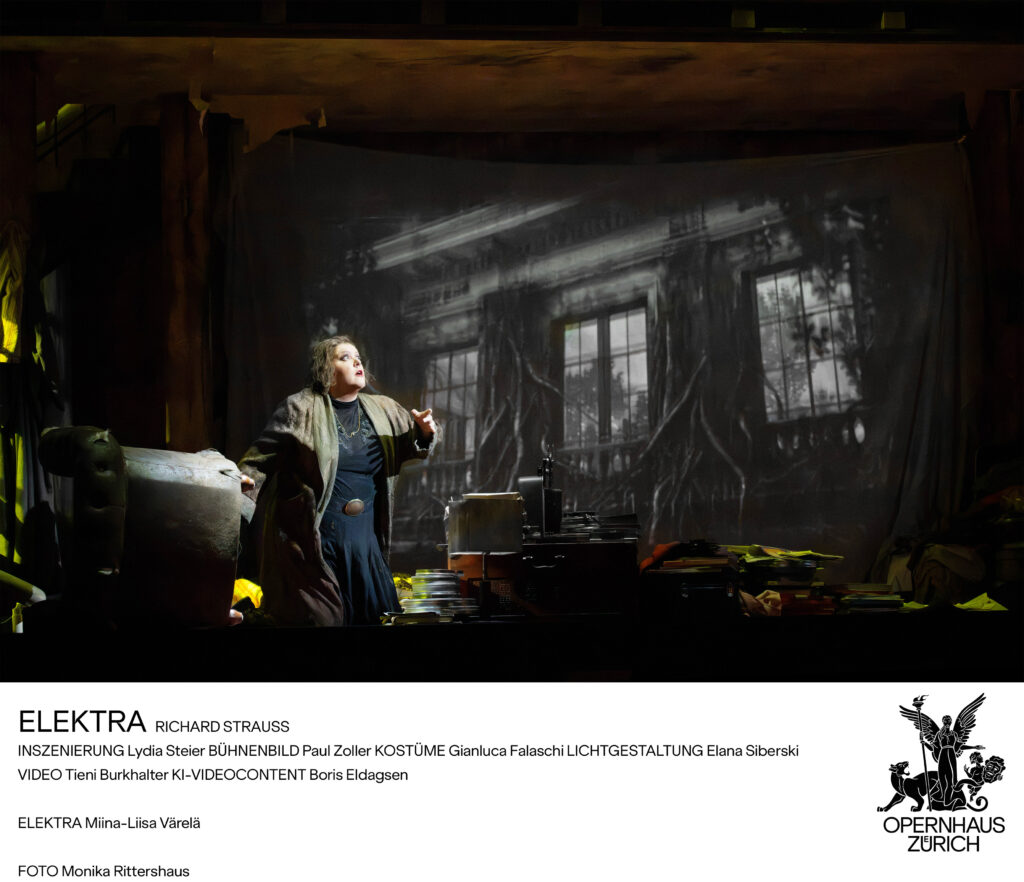
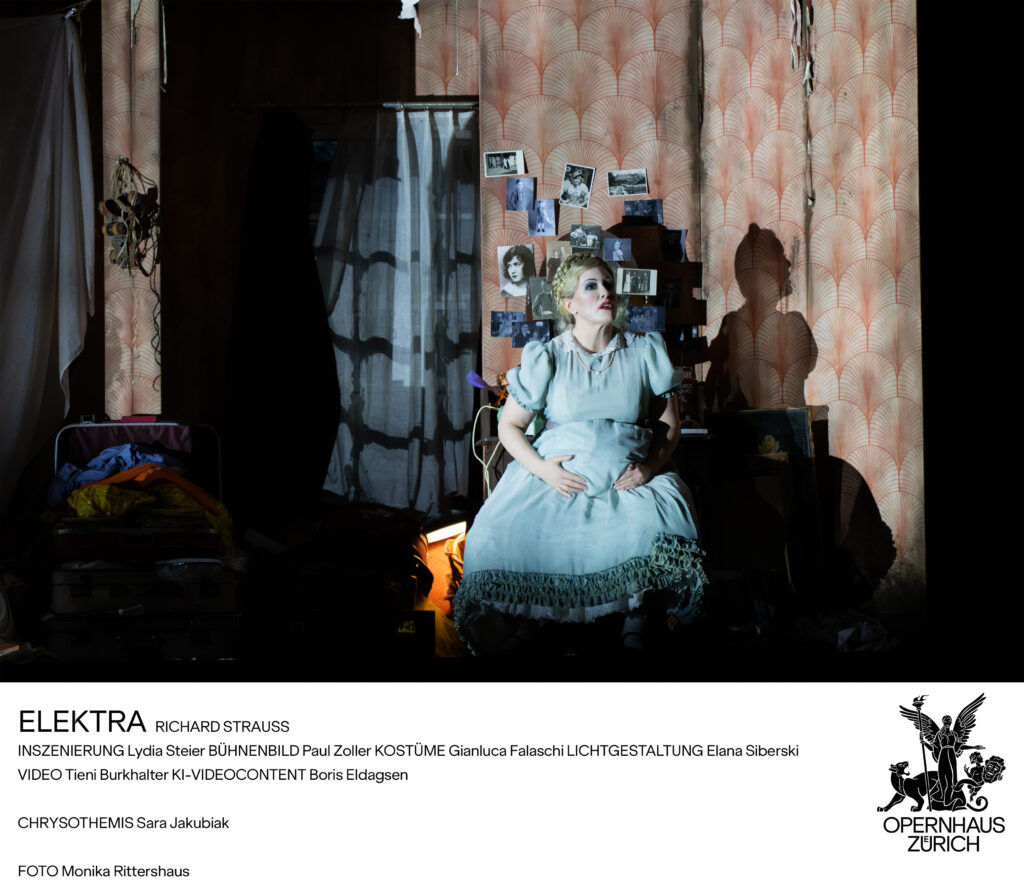
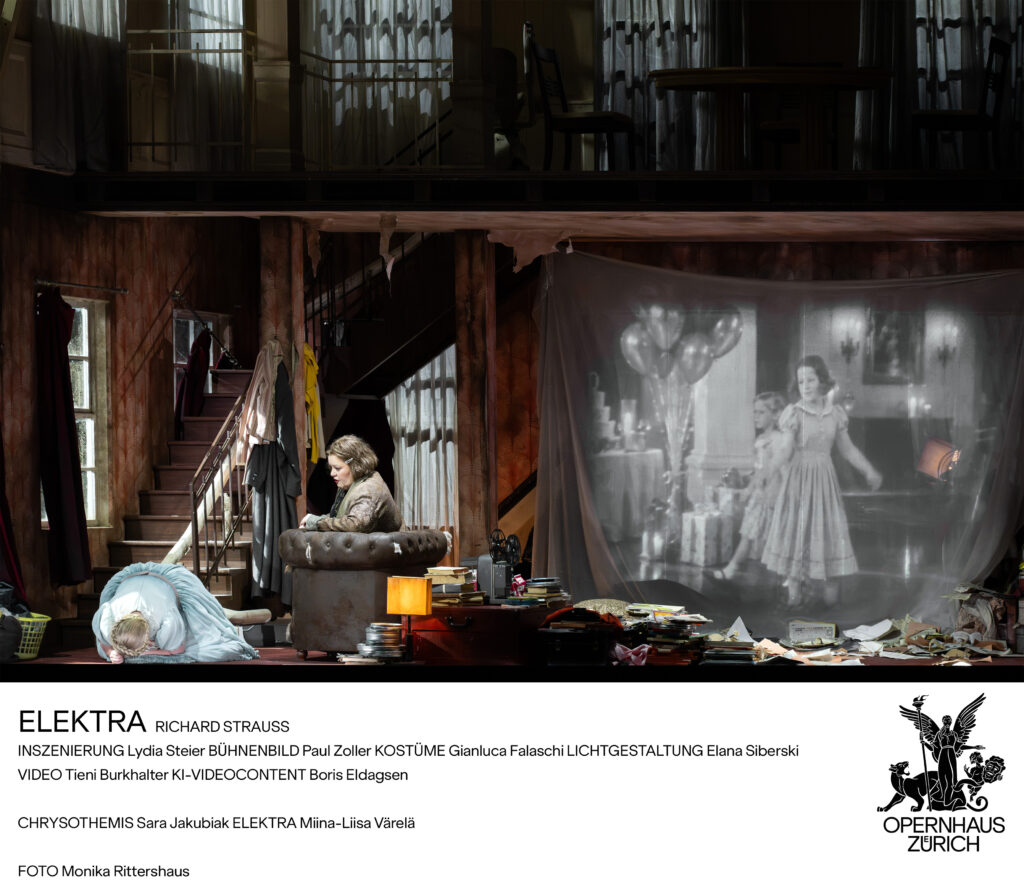
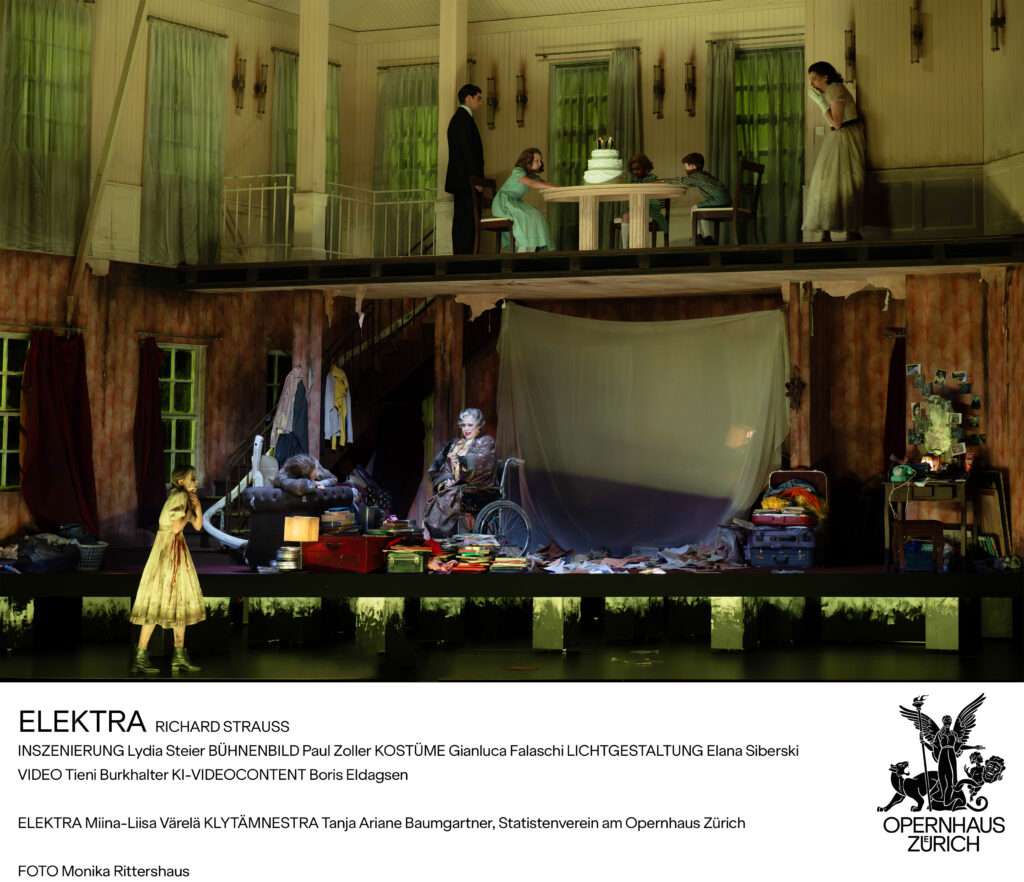
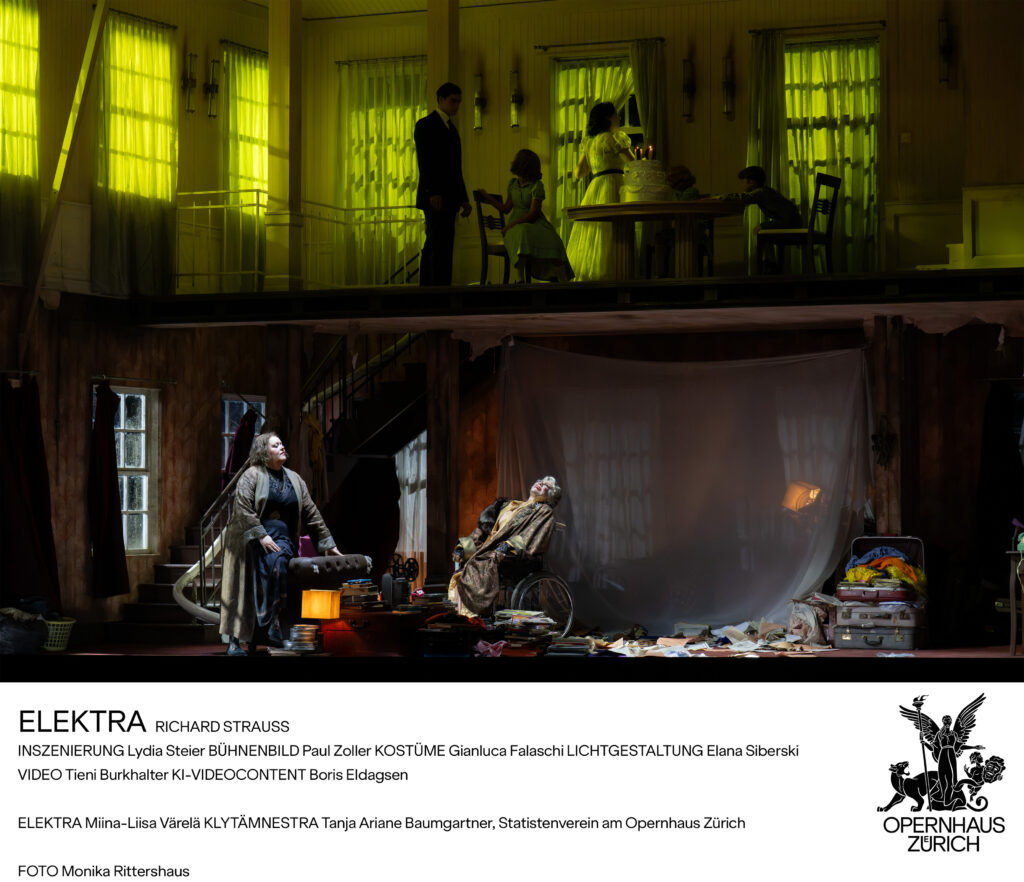
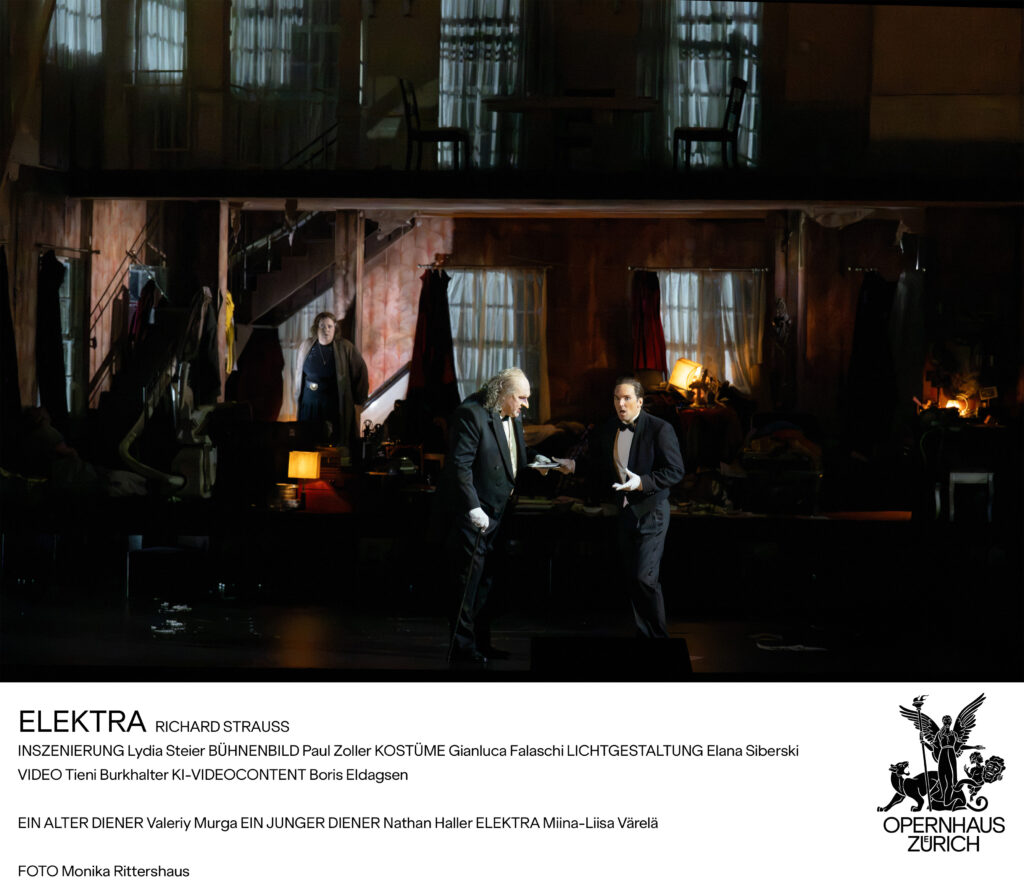
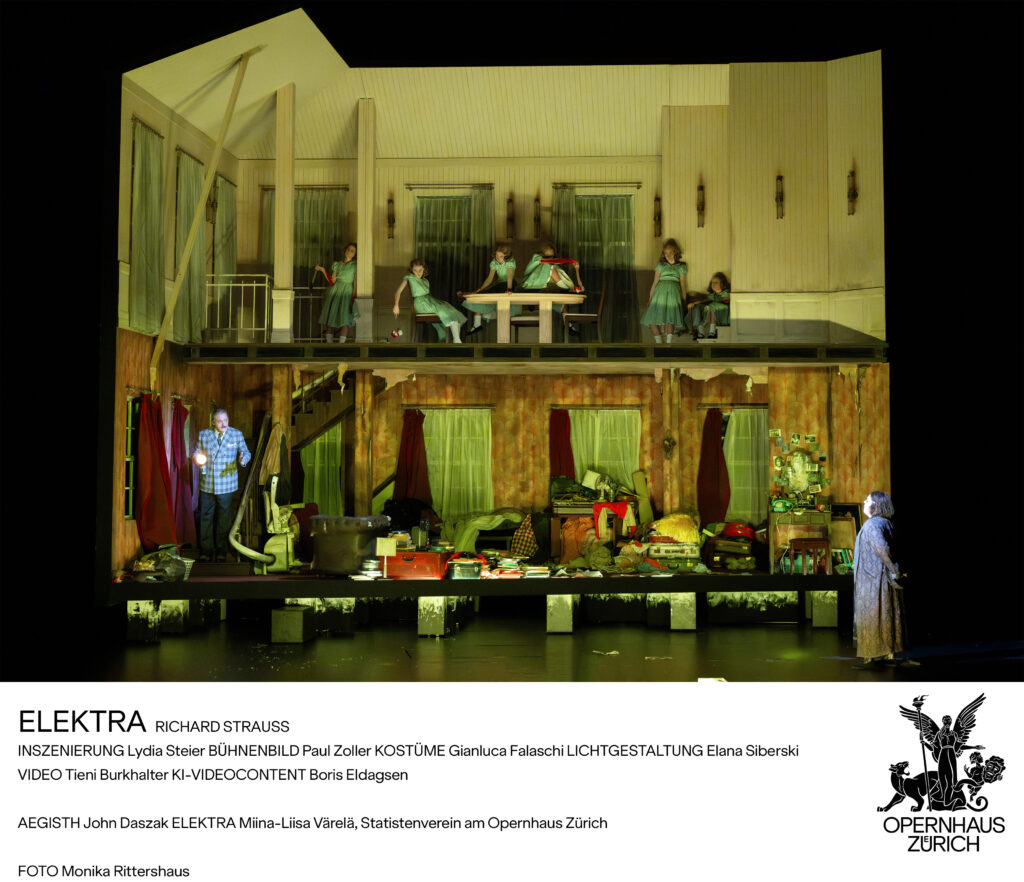
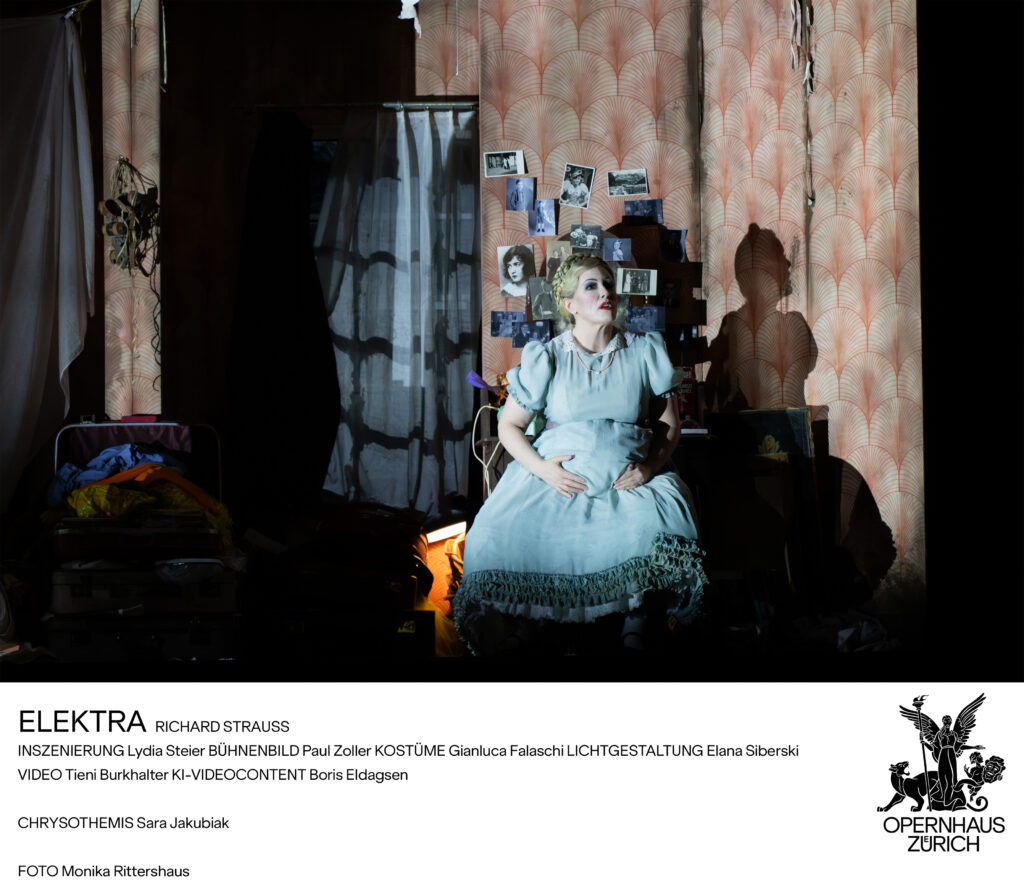
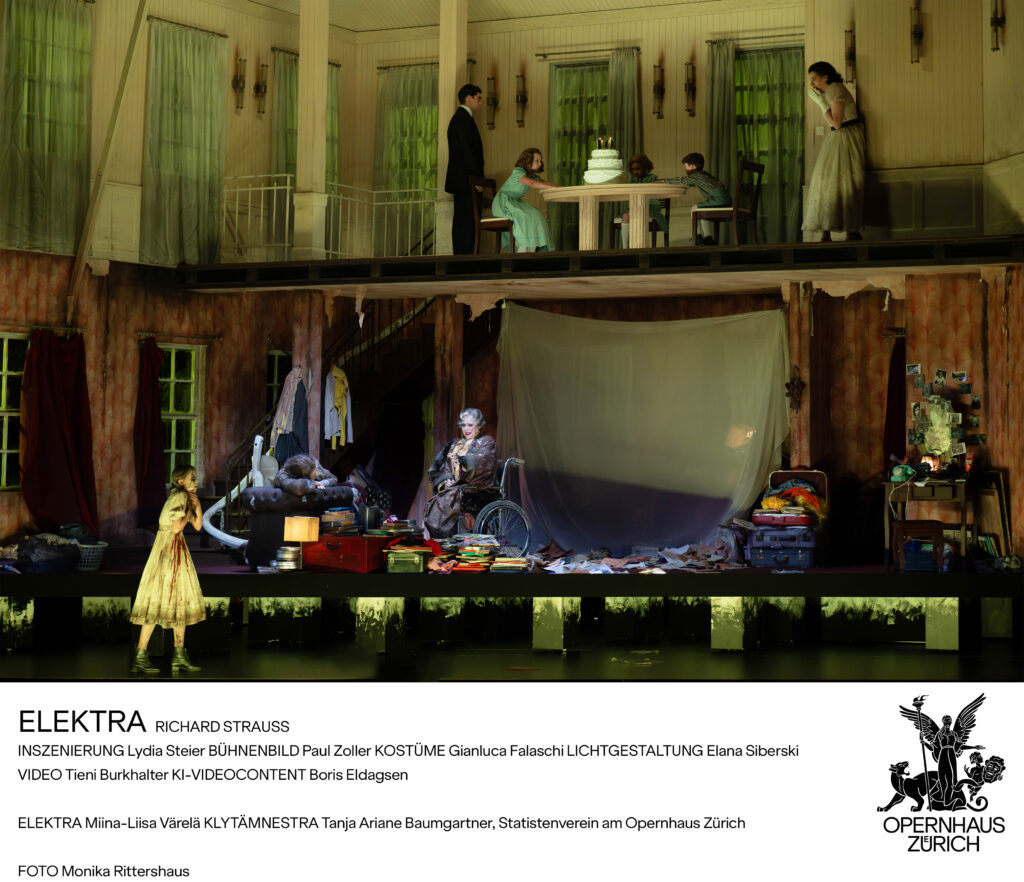
We deliberately skipped the pre-performance talk. We knew the outline of the plot from the Reclam opera guide; what Steier intended to do with it, we wanted to discover in the theatre. A production should not require a lecture before it can be understood. Steier sets the action in a world reminiscent of the 1950s, for which Paul Zoller has built an exceptionally elaborate, realistic house. Upstairs, the household is tidy and presentable; downstairs, Elektra lives among curtains that look as though they have not been washed in years, piles of suitcases, some standing open, and a desk crowded with possessions. Furnished down to the smallest detail, the house could easily serve as a film set. Its two levels tell us something about the people who inhabit it before anyone has sung a note. The neglect of Elektra’s quarters seemed deliberate: a reflection of her place in the household, tolerated but no longer cared for.
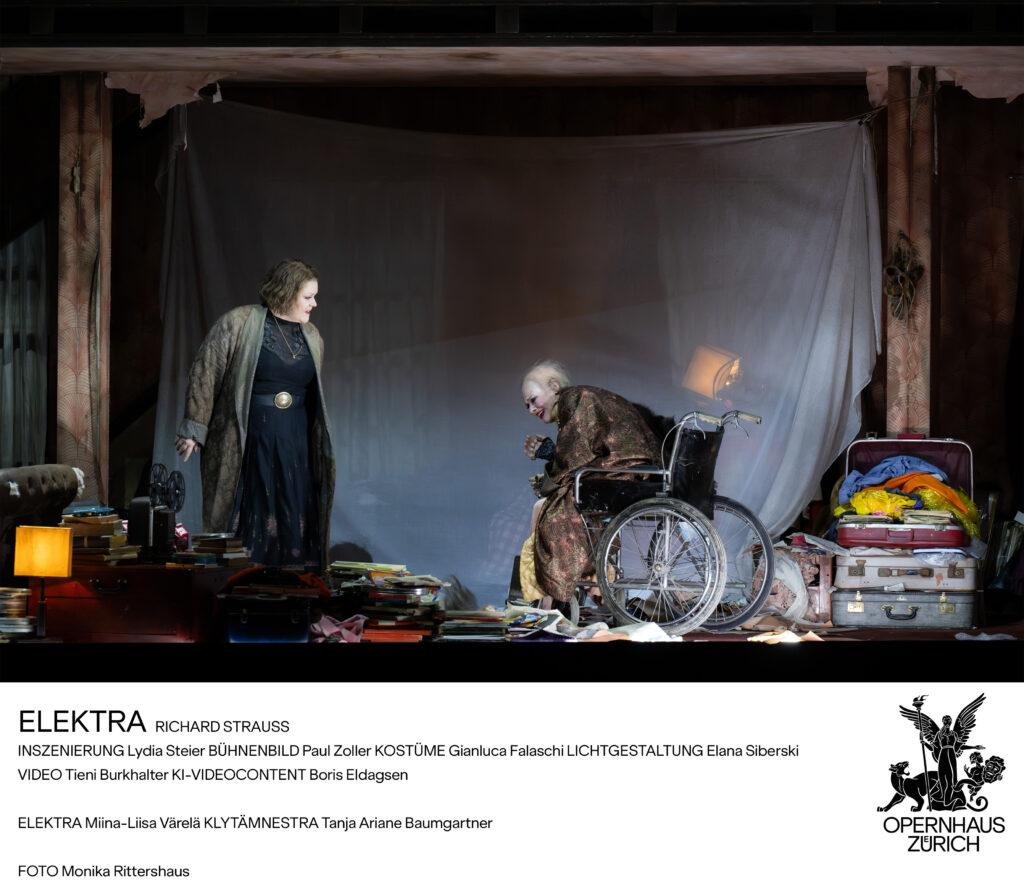
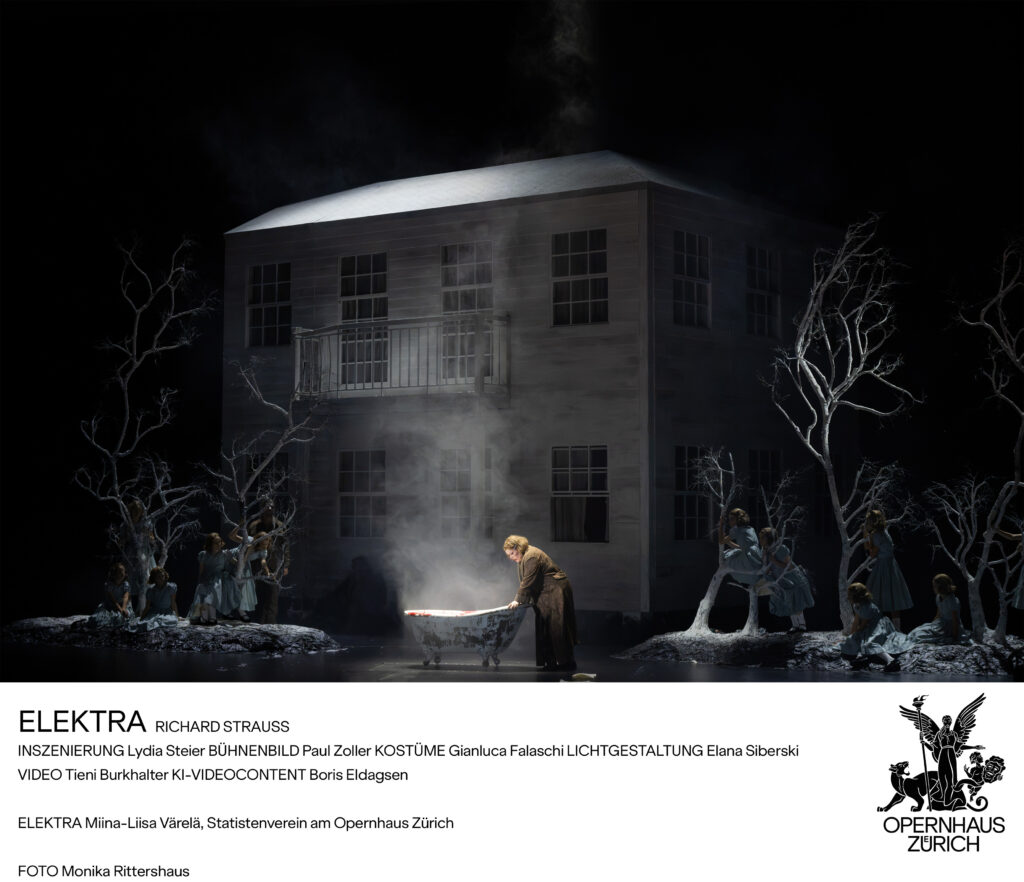
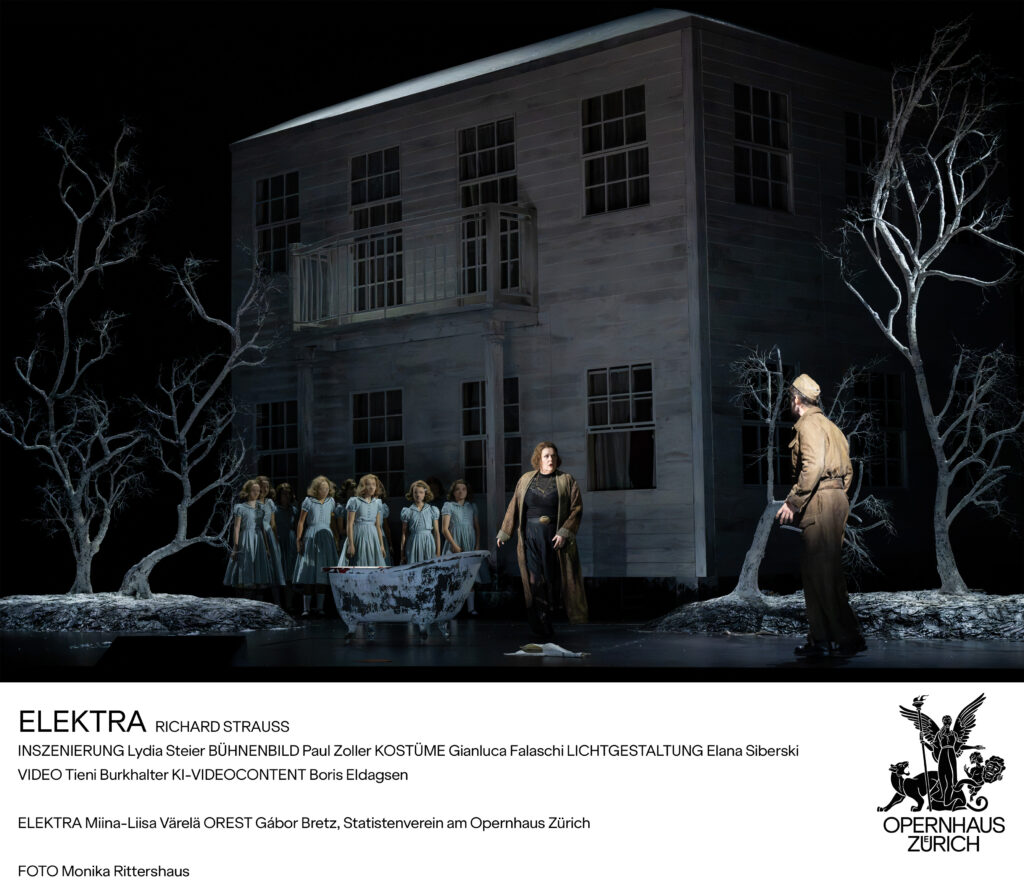
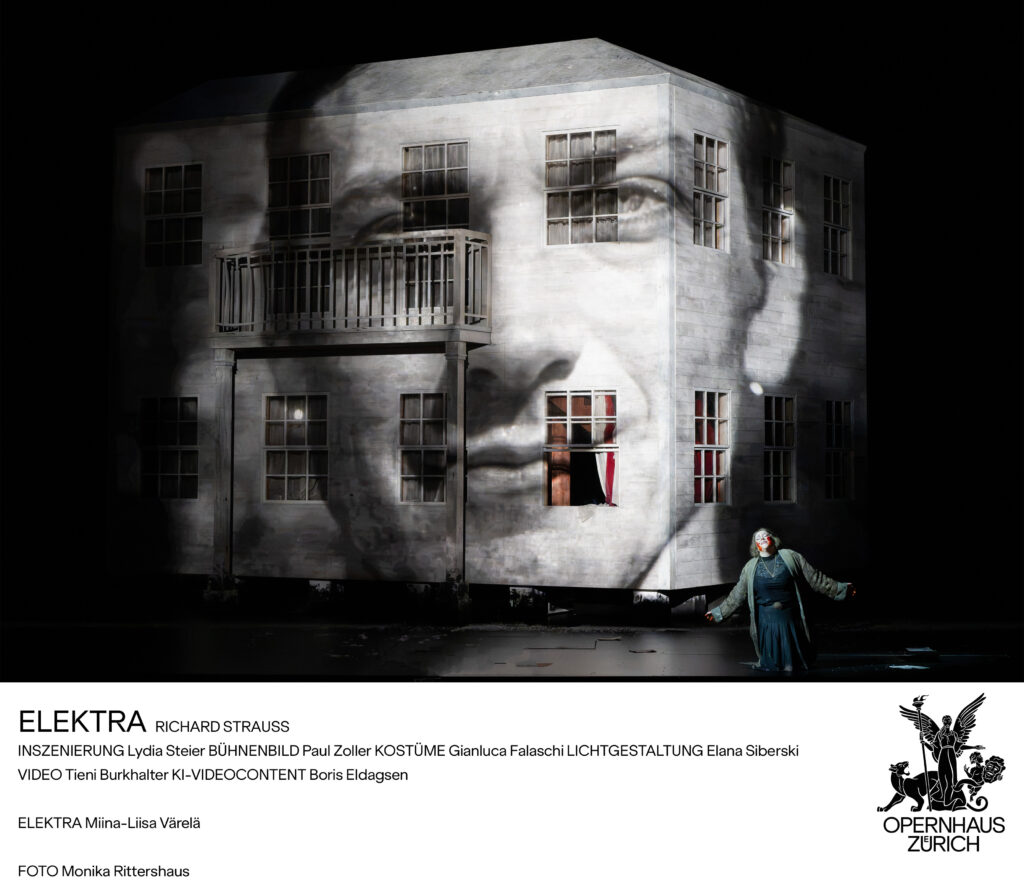
The set captured the score’s dark, mysterious atmosphere remarkably well. Moving Elektra to another period did nothing to diminish its eeriness. Together with Elana Siberski’s lighting, the house suggested that something threatening might emerge at any moment from behind its respectable façade. When it turned on the revolve, its white exterior looked reassuringly like an ordinary American home – the sort that might turn out to be haunted in a horror film. Klytämnestra in her wheelchair brought What Ever Happened to Baby Jane? to mind. Whether Steier intended either reference, we cannot say; her visual world certainly invited such associations. The performers remained compelling presences within it, too, and her direction of them did not disappoint us.
A cross between Clark Gable and Dieter Meier
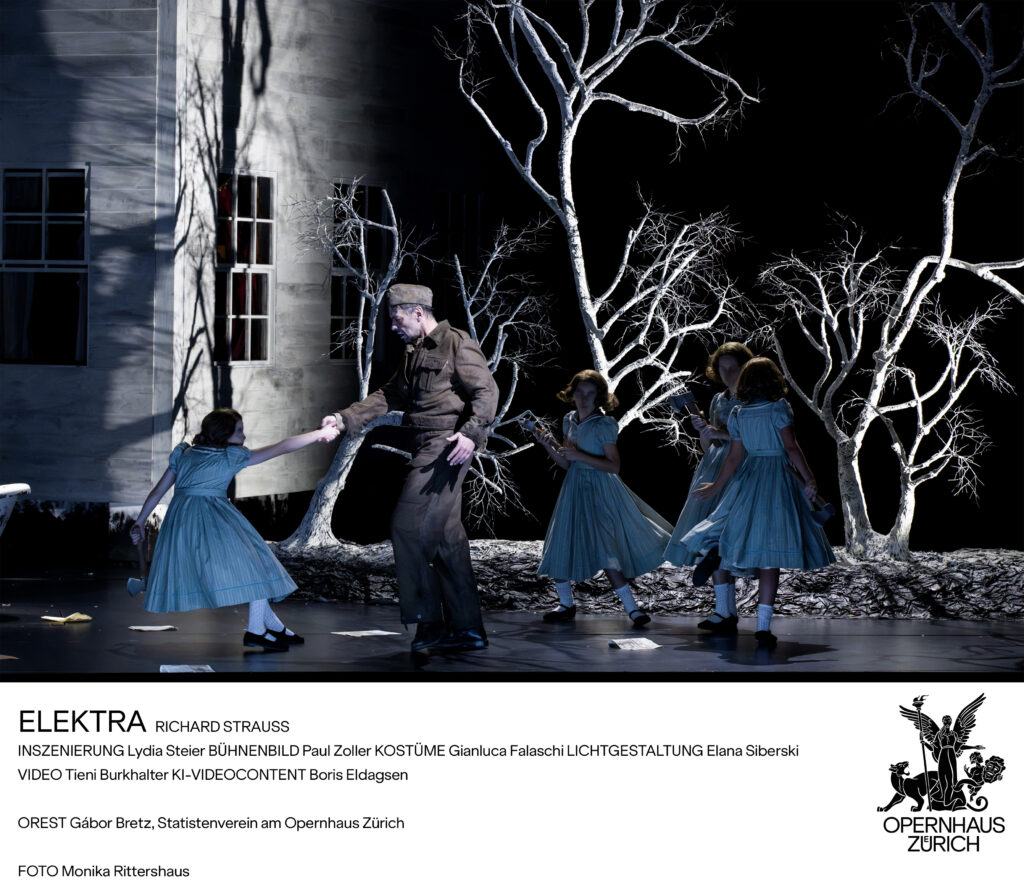
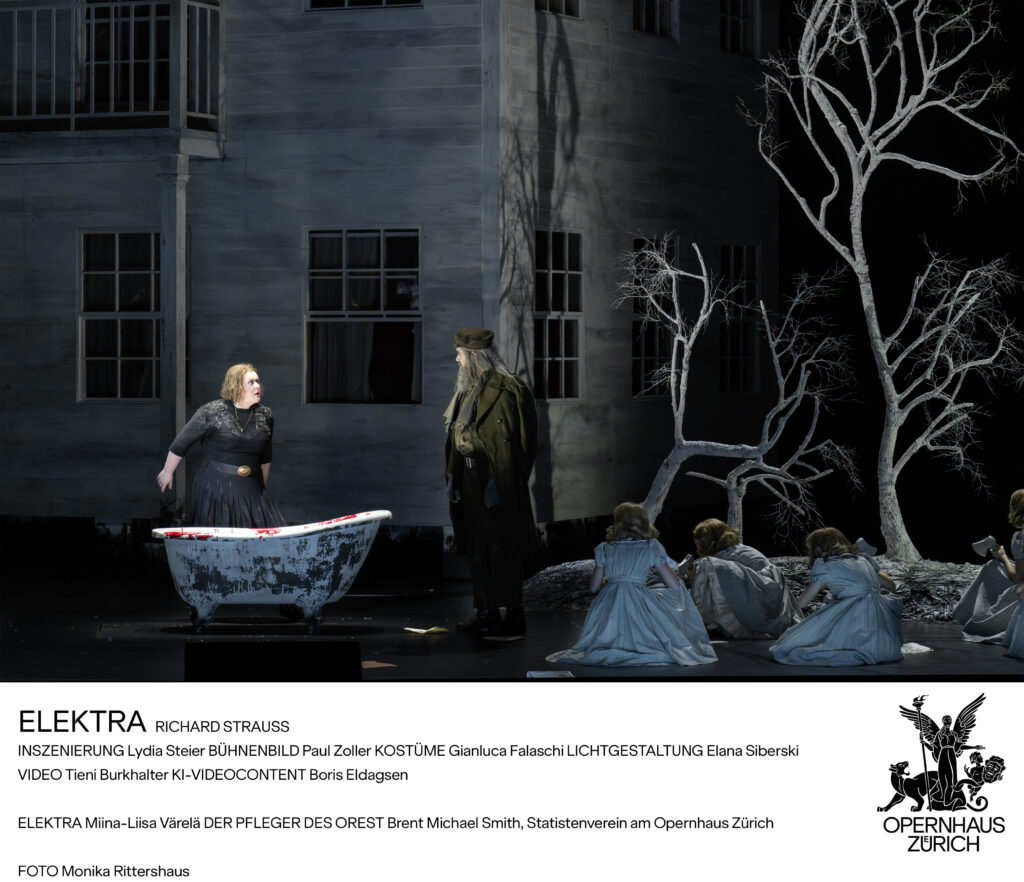
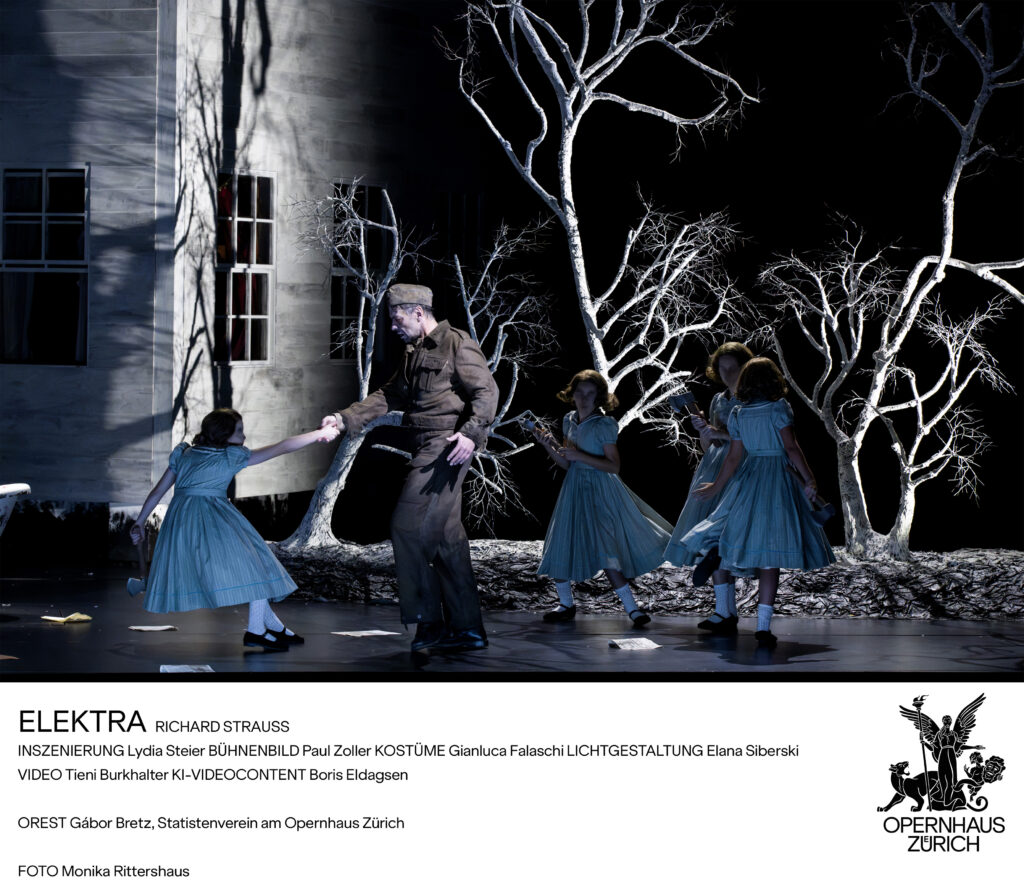
Gianluca Falaschi’s costumes, created with the assistance of Anna Missaglia, suited this world perfectly. They did not merely look ‘period’: they were chosen with such care that the characters might have stepped straight out of a film. Elektra reminded us of Kathy Bates in Misery, less because of any particular item of clothing than because of her unsettling tenacity. Chrysothemis wore a pale-blue dress suggestive of Alice in Wonderland. Later, in scenes involving Orest, little girls appeared in similar dresses, their faces blurred and axes in their hands; any suggestion of a fairy tale swiftly gave way to something far more disturbing. Orest appeared in an American military uniform from the Second World War. In his checked suit and moustache, Aegisth looked like a peculiar cross between Clark Gable and Dieter Meier, while the young servant would have fitted comfortably among the staff in Hitchcock’s Rebecca. On stage, these figures belonged to a surprisingly coherent world. Klytämnestra’s wig came off at some point without our noticing, taking with it her last vestige of composure. There was not a dull moment.
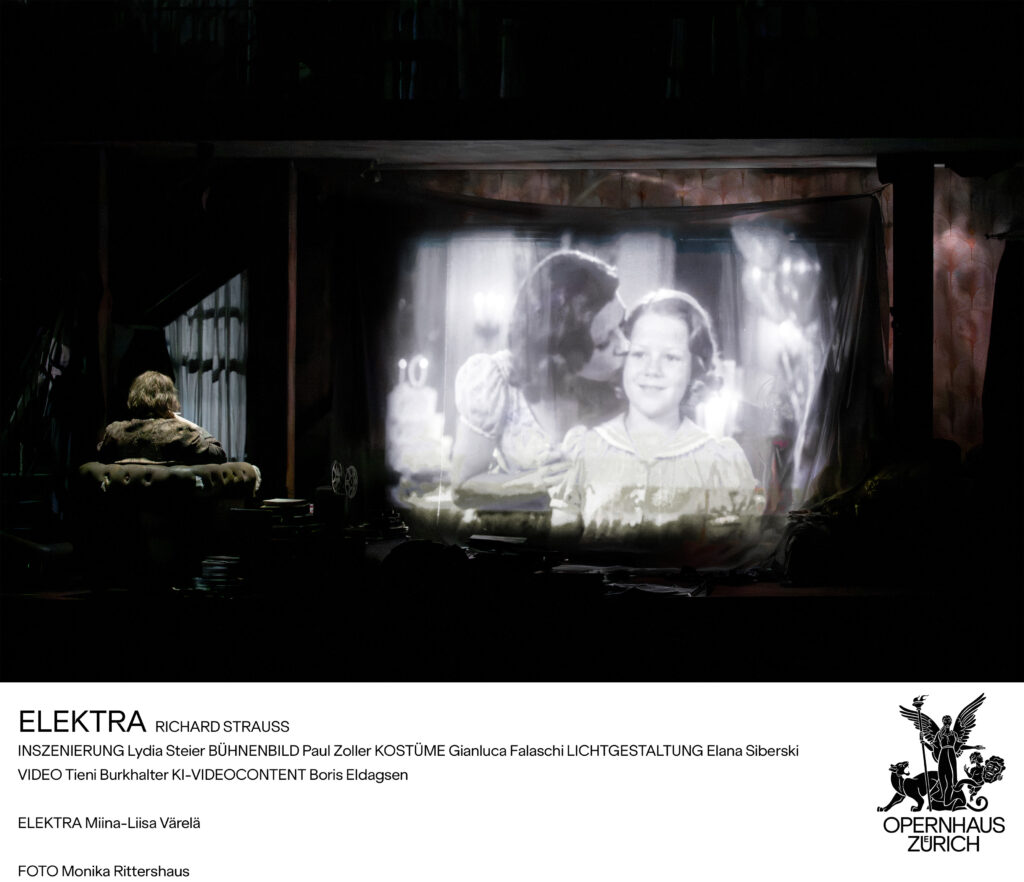
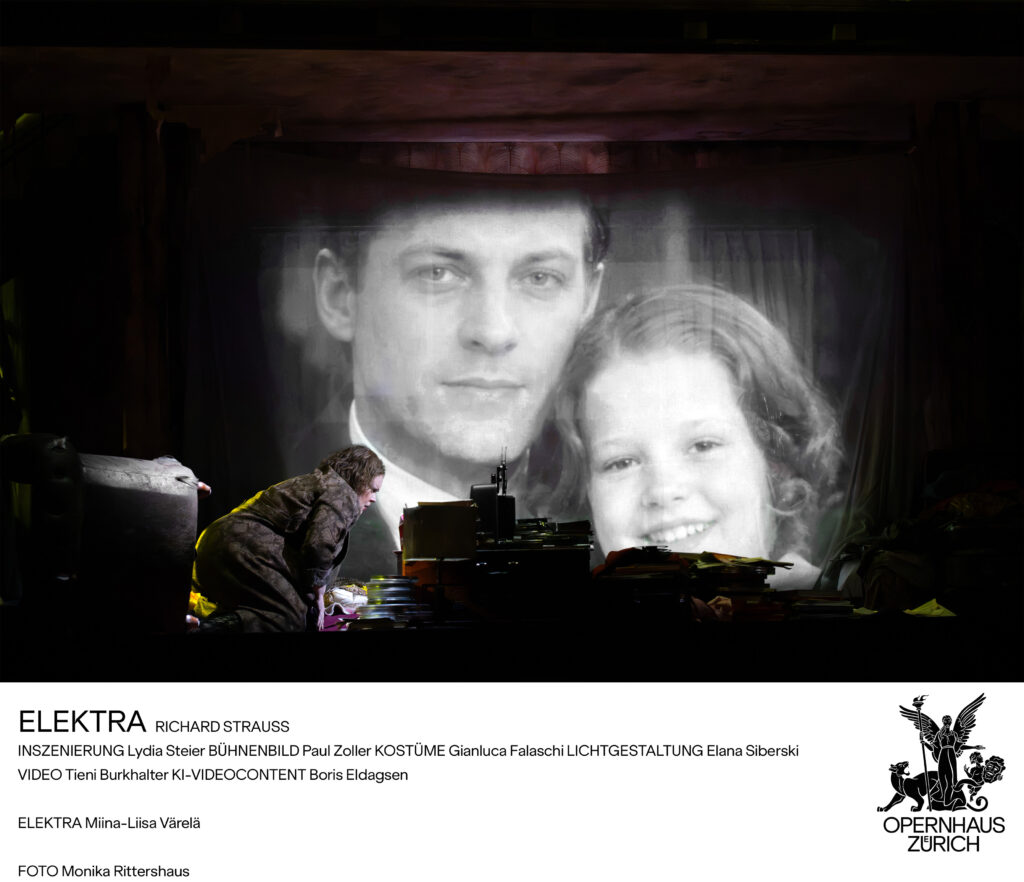
Not everything that heightened the production’s cinematic quality worked equally well. Early on, there were lengthy black-and-white projections which we took to be images from Elektra’s childhood. With so much to discover in Zoller’s set, the video work by Tieni Burkhalter and the AI-generated imagery by Boris Eldagsen felt at times like a video clip to which Strauss’s score had been added as a soundtrack. We were relieved when the projections receded and we could give our full attention once more to the house and its inhabitants.
The house was interesting to hear as well as to look at. When the singers stood inside it, their voices seemed more focused and distinctly louder, with a slight resonance. It recalled the acoustics we remember from the Artscape Theatre Centre in Cape Town. As the house turned and the singers moved in front of it, the sound changed; inside, the enclosed space seemed to help their voices carry, and the difference was unmistakable to our ears.
Musically, the opening took us by surprise. The first bars of Elektra can almost send one leaping out of one’s seat; under Viotti, they did not deliver quite the shock we had expected. For a moment, we wondered whether the whole performance would be relatively subdued. It soon became clear that the Orchestra of Opernhaus Zürich could summon tremendous force when called upon, while playing with impressive precision, polish and beauty of tone. Viotti simply refused to let sheer volume eclipse the score’s other qualities. What particularly impressed us was the rhythmic assurance we had hoped for, and the clarity with which the musical structures emerged. The woodwind played with fine intonation; even amid the score’s dramatic edge, there was warmth in the sound. The singers had room to sing softly without any loss of tension. We have Solti’s almost overwhelming recording in our ears, of course, but to measure every Elektra against it would be to miss what else the score can do. Viotti found his own way through the work, and we liked it very much.
An unexpectedly beautiful tone
For us, Miina-Liisa Värelä was the outstanding performer of the evening. We have often heard an Elektra and grown increasingly anxious for the voice as the performance progressed: the middle register begins to sag, the high notes become insecure or are cut short, and by the end one has the impression of witnessing a singer’s vocal self-destruction. There was none of that here. From her great opening monologue, ‘Allein! Weh, ganz allein’, through the confrontation with Klytämnestra and the recognition scene with Orest, Värelä sang with unexpectedly beautiful tone, a distinctive timbre and carefully shaped phrases, at times almost with a bel canto ease. Even in the great outbursts, her voice remained secure. The top notes were cleanly attacked and sustained for their full value. There was no cheating here; she gave every note its due. The many bravos at the end were thoroughly deserved.
We still remember Tanja Ariane Baumgartner’s thrilling Carmen at Theater Basel in 2011, a performance that did much to redeem Calixto Bieito’s regrettably unforgettable production. Her singing was musical and finely judged, with a full-bodied middle register and powerful, gleaming top notes. We had not had another chance to hear her live until now. As Klytämnestra, her deep, ample voice gave the character weight, particularly in the scene beginning ‘Ich habe keine guten Nächte’, while her diction remained exceptionally clear.
As Chrysothemis, Sara Jakubiak brought a large, powerful voice and generously resonant top notes to ‘Ich kann nicht sitzen und ins Dunkel starren’, her impassioned longing for a life beyond this house; with vocal resources like these, we could readily imagine her singing Elektra herself. Gábor Bretz’s Orest, dressed in the uniform of an American soldier, seemed marked by the trauma of war. His haunted presence gave the recognition scene with Elektra a particular gravity. John Daszak gave Aegisth a sharply defined presence. Among the smaller parts, Nathan Haller again caught the eye as the young servant. As the first maid, Dominika Stefańska made us sit up at once with the opera’s opening words, ‘Wo bleibt Elektra?’, delivered in a resonant voice that carried through the house.
It was also a pleasure finally to see Melanie Diener on stage as the overseer. Her name had long been familiar to us from her 2002 recording of Strauss’s Four Last Songs with the Tonhalle Orchestra under David Zinman, though we had never seen her perform live.
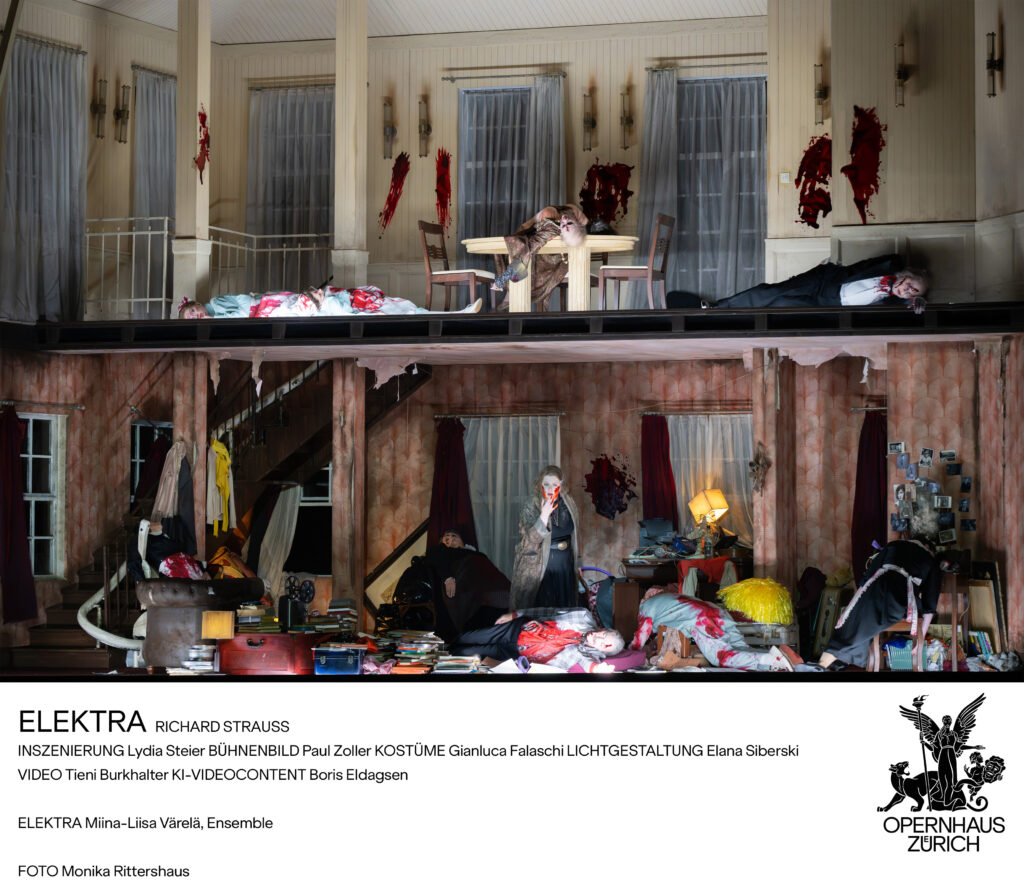
Towards the end, an almost bewildering number of deaths took place in the house. Maids and servants lay bloodied on the floor; Orest appeared to have killed far more people than the story would lead one to expect. Chrysothemis came down the stairs scattering what looked like ashes; we wondered whether they might be Orest’s remains, and whether he had set himself alight. Finally, Elektra appeared to kill Chrysothemis too.
Hofmannsthal, a libretist of little consequence
As the action on stage moved ever further from what was being sung, we found ourselves wondering how the two were meant to fit together. If a production changes the course of events so substantially, might some adjustment to the text be needed to keep the story coherent? With Strauss and Hofmannsthal, that is hardly a straightforward proposition. We remembered another production in which Elektra actually danced at the end: each time Strauss’s music surged again, she tried to resume her dance, only to collapse once more. That ending was far more dramatic in its relationship with the score, and it required no such drastic departure from the original action. Steier’s production had more than enough dramatic force without these deaths; by the end, we felt we were watching a rather different Elektra from the one the libretto describes.
A remark we overheard in the cloakroom suggested how strongly Zoller’s set had impressed others, too. One woman was delighted, she said, finally to have seen a ‘proper set’ that justified the ticket price. She contrasted it with Tatjana Gürbaca’s Lucia di Lammermoor, which she had found cheap-looking. Our own memories of that production made her comparison understandable, though Zoller’s achievement scarcely needed one.
This Zurich Elektra was a gripping evening in the theatre and a musically distinguished one. The richly detailed house, excellent costumes and lighting created an unsettling world that stayed with us to the end. We could happily have done without some of the video projections, and some of the additional deaths. Viotti and the finely disciplined orchestra impressed us with an interpretation of rhythmic clarity and tonal variety. Above all, though, we shall remember Värelä’s magnificent Elektra. The production team received warm applause and numerous bravos; two muted boos from the upper tiers were all but lost in the acclaim. We left the opera house impressed by a performance that had not bored us for a moment yet troubled by an ending in which the stage told a different story from the words being sung. For all our reservations, we would gladly see this production again.