

Regietheater. Intellectual terror through compelling prescription. The dictatorship of the director has turned the opera world into an ideological and aesthetic battlefield, in which the score and the creator’s original intent have been systematically sacrificed on the altar of the director’s narcissism for decades. What began in 1951 as an almost clinical aesthetic intervention by Wieland Wagner -who sought to “purify” the Bayreuth Festival with his minimalist and stripped-down productions and free it from its burdened traditions-degenerated in the 1970s into a destructive artistic totalitarianism: the unadulterated and radical Regietheater.

Regietheater. Intellectuele terreur op dwingend recept. De regiedictatuur heeft van de operawereld een ideologisch en esthetisch slagveld gemaakt, waarin de partituur en de oorspronkelijke intentie van de schepper al decennialang stelselmatig worden geofferd op het altaar van het regisseursnarcisme. Wat in 1951 begon als een bijna klinische esthetische ingreep door Wieland Wagner -die de Festspiele in Bayreuth met zijn minimalistische en kaalgeslagen ensceneringen trachtte te “zuiveren” en te verlossen van de beladen tradities- ontaardde in de jaren 70 in een destructief artistiek totalitarisme: het onversneden en radicale Regietheater.
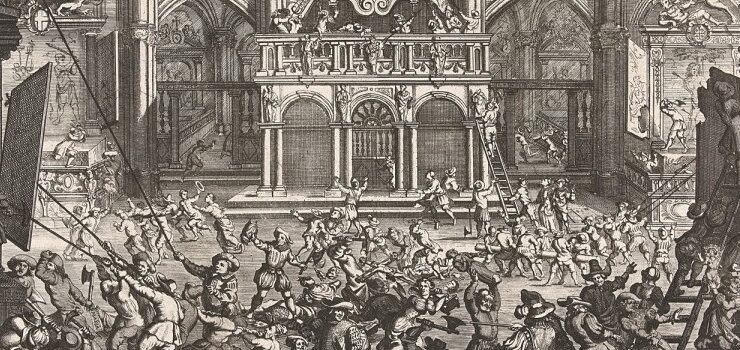
Iconoclasm in Opera. The public is losing access to its own cultural and musical roots because the institutions tasked with protecting and nurturing those roots have opted for a permanent, subsidized iconoclasm. It is an insidious, institutional form of cultural cleansing.
Beeldenstorm in de opera. Daarnaast getuigen beide fenomenen van een mateloze, stuitende arrogantie en agressie ten opzichte van het verleden. De beeldenstormers meenden dat zij, na eeuwen van vermeend dwalen, de enige ware interpretatie van de werkelijkheid in pacht hadden. De tradities van generaties kunstenaars, denkers en ambachtslieden werden in een oogwenk als waardeloos of schadelijk gecategoriseerd. Deze chronologische arrogantie viert ook in de hedendaagse operapraktijk hoogtij. Binnen de theatrale avant-garde heerst het hardnekkige, dictatoriale dogma dat een klassiek stuk pas \’relevant\’ (ook wel: ‘urgent’ of \’desoriënterend\’ kan zijn wanneer het door de mangel van de modernisering en deconstructie is gehaald.

Sophie doet een Esmah Lahlah’tje. Sophie de Lint vertrekt voorlopig niet van Amsterdam naar Salzburg. Hoewel er sterke geruchten waren en er intensief werd onderhandeld over een overstap, is de overstap definitief mislukt. Er circuleerden plannen om De Lint aan te stellen bij het prestigieuze festival in Oostenrijk vanaf het najaar van 2027. Hierdoor blijft Sophie de Lint gewoon verbonden aan De Nationale Opera in Amsterdam. Zoals Sophie de Lint vertrekt voorlopig niet van Amsterdam naar Salzburg. Zoals Esmah Lahlah na mislukte sollicitaties gewoon terug kon keren naar de Tweede Kamer en vervolgens naar de Gemeenteraad van Amsterdam.
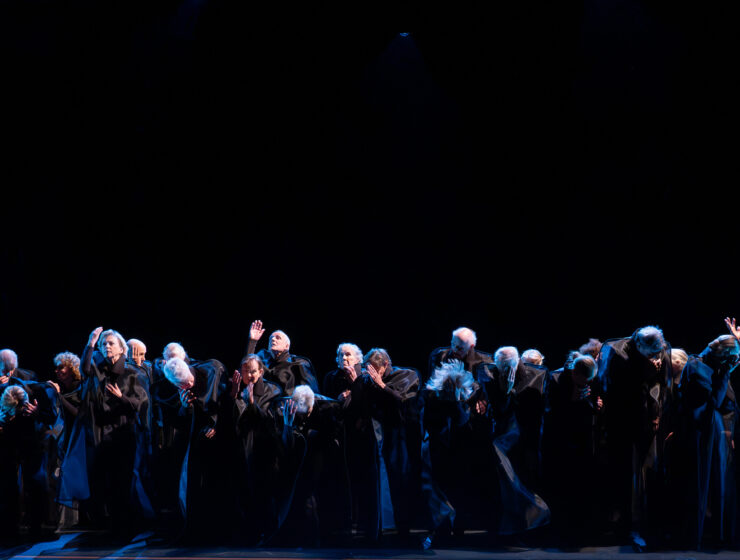
Kolja. De regie van Jeroen Lopes Cardozo was briljant, een inventieve en sfeervolle verbeelding van het verhaal. Absoluut een van de beste regies die wij de laatste veertig jaar In Nederland mochten aanschouwen. Oneindig veel kudos voor Jeroen Lopes Cardozo.

The Maestro and the Olympic Athlete. A legendary example of an acoustic and physical nightmare is the “Scena delle maschere” (Don Giovanni): Donna Anna, Don Ottavio, and Donna Elvira sing the trio “Protegga il giusto cielo.” For this ball scene, Mozart composed three different on-stage ensembles that play simultaneously with the orchestra in the pit. Each group plays in a different time signature—namely, 2/4, 3/4, and 3/8. At the same time, the soloists walk among the partygoers while singing. \\\”Well, here\\\’s another nice mess you\\\’ve gotten us into!\\\”
De Maestro. Een legendarisch voorbeeld van een akoestische en fysieke nachtmerrie is de \\\\\\\”Scena delle maschere\\\\\\\” (Don Giovanni): Donna Anna, Don Ottavio en Donna Elvira zingen het trio \\\\\\\”Protegga il giusto cielo\\\\\\\”. Voor deze balscène componeerde Mozart drie verschillende on-stage orkestjes die tegelijk met het orkest in de bak spelen. Elk groepje speelt in een andere maatsoort, resp. in 2/4, 3/4 en 3/8. Tegelijkertijd lopen de solisten zingend door de feestgangers. Lekker dan!
“Gelijk Ik hoor, oordeel Ik\\\\\\\\\\\\\\\\\\\\\\\\\\\\\\\”. Een hoofdredacteur die bijklust bij een operagezelschap dat hij moet evalueren, dat is wel schokkend, maar niet in de juiste zin. Dat is een typisch kenmerk van de ons-kent-ons snobistische operakliek die kritische recensenten tegenwerkt en financieel benadeelt, maar een site minzaam tegemoet treedt die de lezersforumfunctie uitschakelt vanwege de nadeligheid voor banden met zangers en operahuizen.

Het Conceptuele Rariteitenkabinet van het Regietheater. Ironie is het duizenddingendoekje van de hedendaagse regie. Handig, veelzijdig en vooral populair bij mensen die hun Morgenmuffeligkeit tot levensmotto hebben gemaakt en niet meer geloven dat schoonheid zonder aanhalingstekens kan bestaan.