Iconoclasm in Opera
The Cultural Demolition Hammer: Iconoclasm and Contemporary “Regietheater”
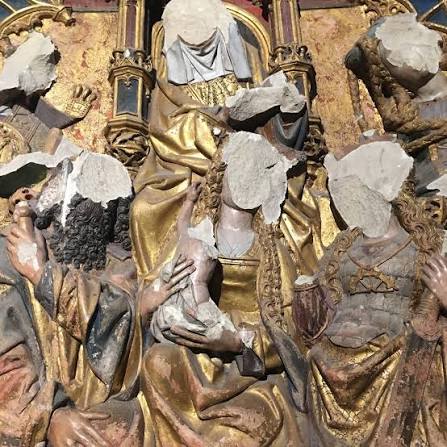
In the year 1566, a wave of relentless destruction swept through the Low Countries. Armed with hammers, chisels, and ropes, groups of heretics and mobilized citizens stormed the centuries-old cathedrals and churches. Statues of saints were torn from their pedestals, altars smashed to pieces, and frescoes hastily concealed from view under a thick layer of whitewash. Although the motives were originally theological and political in nature, the immediate result was a scorched earth of artistic heritage. The sectarian ruffians gave free rein to their iconoclastic instincts with brutal indifference, acting raw and fervent. We know this: once these hypocritical Protestant fanatics succumb to shocking exuberance, they are ruthless in their shocking hypocrisy. Beware, then!
More than four and a half centuries later, the opera-goer finds himself in a situation that bears a disturbing resemblance. Anyone who enters an opera house today to see Mozart, Verdi, or Wagner -things to restore the ego- is shamelessly robbed of the historical, musical, and artistic integrity of the original masterpiece. Instead, the destructive “Regietheater” dominates—a totalitarian movement in which the director no longer considers himself the servant of the score and libretto, but acts as a megalomaniacal dictator. In the drive toward radical deconstruction lies a modern, sub-intellectual iconoclasm. Although the physical instruments have changed -the iron hammer has been replaced by pretentious nonsense, the chisel by a severe form of pseudologia fantastica- the Iconoclastic Fury and today’s “Regietheater” share a deep, structural similarity in their artistic, barbaric savagery: both movements sacrifice the artwork to a compelling ideological agenda and ruthlessly break with historical continuity.
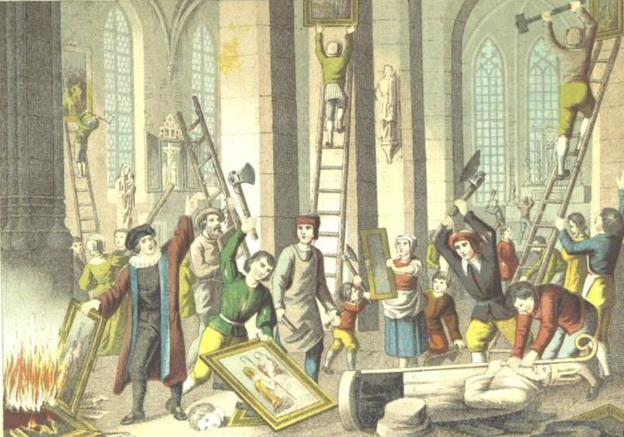
To understand the essence of this shared barbarism, one must examine the fundamental distrust of the existing work of art. The sixteenth-century iconoclasts acted out of the conviction that religious imagery was corrupt and misleading. In their eyes, the image formed a barrier between humanity and pure truth (Paula and Pub). A similar distrust characterizes the dogmatic, grumpy director of “Contemporary Opera.” The classical score or the intended operatic form is no longer seen as a monument to human insight to be judged on its own merits, but rather as a suspect document. It must be approached with bitter suspicion and ruthlessly purged of supposedly anachronistic values—or, conversely, deployed with brute force to reinforce the banal dogmas of our errant present. Repulsive.
Mud-stained, narrow-minded thinkers
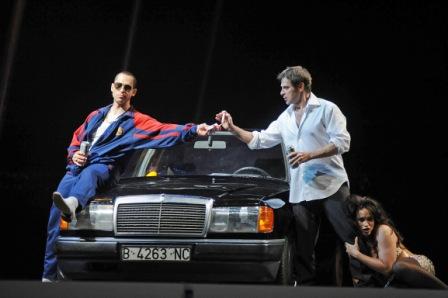
When a confused, narrow-minded thinker decides to set a sublime classical masterpiece in a dingy office building or a public restroom, to drown out the sublime musical tension with provocations, and to reduce the profound existential tragedy to an unambiguous pamphlet on current politics, an artistic decapitation takes place. This intellectual vandalism becomes tangible, for example, in the grotesque stagings of a celebrated iconoclast like Calixto Bieito, who degraded Mozart’s brilliant Don Giovanni into a repulsive, drug- and sex-obsessed gang war in a slum. Or take Hans Neuenfels, who, in his infamous Bayreuth production, desecrated Wagner’s mystical and sublime *Lohengrin* by shamefully transforming the opera chorus into a hysterical mob of giant laboratory rats.
In both periods, the actor cares nothing for the work of art in its own sovereign form; the work must unconditionally submit to the dictates and whims of the day. The animals are in charge of the zoo. In both historical periods, an act of pure, sadistic deconstruction takes place that either denies the object’s intrinsic value or transforms it into an object of blind rage.
A second parallel is the overall leveling of complexity in favor of an unambiguous monoculture. The Iconoclastic Fury replaced the layered, sensory, and mystical symbolism of the medieval tradition with the stark, rational, and exclusively text-oriented austerity of early Protestantism. The profound mystery had to give way to the moral lesson.
Directional theater is carrying out a similar intellectual purge on the opera stage. Whereas classical opera masterpieces excel in their profound emotional and moral ambiguity -in which good and evil, love and destruction are often inextricably intertwined- the circular nightmare of “Regietheater” forces the audience into a rigid, infantile moral straitjacket.
Cultural-Marxist propaganda
In contemporary opera practice, complex characters are often reduced to one-dimensional caricatures of political viewpoints. The production transforms into a visual scrapbook in which the director explicitly and arrogantly spoon-feeds the audience the “correct” ideological stance regarding contemporary social issues. This reduction of sublime art to mere shallow, often veiled cultural Marxist propaganda is an extreme form of intellectual barbarism. It robs the opera of its cathartic, transcendent, and spiritual function and replaces the layered aesthetic experience with an aggressive form of secular moralizing. Just as the iconoclasts transformed richly decorated churches into bare, dystopian haunted houses, so too does the creaky Regietheater transform the opera house into a moral court where artistic nuance dies.
The Pitfalls of Modernization
Furthermore, both phenomena reveal an excessive, shocking aggression toward the past. The iconoclasts believed that, after centuries of alleged straying by others, they alone held the exclusive right to the true interpretation of reality. The traditions of generations of artists, thinkers, and artisans were instantly dismissed as worthless or harmful. This narrow-minded arrogance also runs rampant in contemporary opera practice. Within the theatrical avant-garde, there prevails a stubborn, dictatorial dogma that a classical work can only be “relevant” (also known as “urgent” or “disorienting”) once it has been put through the wringer of modernization and deconstruction. This implies the paternalistic and insulting prejudice that the modern audience is incapable of understanding the universal human condition and musical genius unless these are presented in the fashionable, ephemeral forms of the present day. The sacred bond with the past -which must be kept alive through the faithful performance of classical masterpieces- is thereby deliberately and maliciously severed.
It is often argued that opera is a fleeting performing art and that this comparison is flawed because no physical objects are irreparably destroyed. After all, a score remains intact on the library shelf, while a shattered sixteenth-century statue is lost forever. This naïve objection, however, fails to recognize the institutional and cultural devastation wrought by modern opera practice. When the canon is structurally and exclusively neutered and deconstructed on the major opera stages subsidized by millions in taxpayer money, the living tradition vanishes from the public consciousness. In this case, the destruction is not material, but conceptual, spiritual, and (non-)educational. The public loses access to its own cultural and musical roots because the institutions that are supposed to protect and cultivate these roots have opted for a permanent, subsidized iconoclasm. It is an insidious, institutional form of cultural cleansing.
Narcissistic Drive for Originality
The shared barbarism of the historical Iconoclasm and Regietheater lies in the totalitarian conviction that the ideological end justifies the destructive means. For the sixteenth-century iconoclast, the (initial) goal was religious purity; for the contemporary opera director, it is “social urgency” or the compelling, narcissistic drive for originality. In both cases, this leads to a brutal, deeply disrespectful treatment of that which has been built up by generations before them with genius, care, and dedication. The work of art is no longer respected as an autonomous end in itself, but is abused as a passive instrument for self-promotion. Nowhere is there an enticing, radiant goal.
In conclusion, modern “Regietheater” is in many respects the intellectual heir to the 16th-century iconoclasts. Both movements are rooted in a radical urge to convert, a deep distrust of traditional forms, and an absolute, ruthless willingness to destroy in order to force one’s own dogmatic correctness. Whereas the iconoclasts destroyed the physical vessels of culture, radical directorial theater undermines the spiritual and musical essence of the opera tradition. As long as opera practice clings to this deconstructive destructiveness, it remains a continuation of the Iconoclastic Movement by other means: a stubborn, brazen refusal to let art speak in its true, unblemished form. This contemporary director-led theater is therefore not an enrichment, but a cold-blooded cultural liquidation; it is the definitive, shameless triumph of the artistic vandal over the immortal genius of the composer.
May I offer you some cordial, or perhaps a pastry, my Lord?
Olivier Keegel